“Jesus presented another parable to them saying, ‘The kingdom of Heaven may be compared to a man who sowed good seed in his field. But when he was sleeping, his enemy came and sowed tares among the wheat and went away. But when the wheat sprouted and bore grain, then the tares became evident also. The servants of the landowner came to him and said, ‘Sir, did you not sow good seed in your field? How then does it have tares?’ And he said to them, ‘An enemy has done this.’ The servants asked ‘Do you want us to go and gather them up?’ But he said, ‘No, for while you are gathering up the tares, you may uproot the wheat with them, allow both to grow together until the harvest; and in the time of the harvest Ii will say to the reapers “First gather up the tares and bind them in bundles to burn them up, but gather the wheat into my barn.’” – Matthew 13:24-30
The biggest mental hurdle most people have to the story of Adam and Eve in the garden is, “Why would a good God create something that had the potential to f*** everything up in the first place?”
That’s a great question. Looking at that question on a surface level, you could make the leap that God’s quite a sadist. But a deeper look paints a picture of a creator more loving honorable than we could ever know.
God desired genuine communion and love with his creation, and love cannot exist without free will. Okay then, give the humans free will. But don’t install a self-destruct button! What’s the point of that? Why the tree? Why the fruit? The answer lies in the philosophical question, “can authentic free will exist in the absence of the opportunity to make the wrong choice?” If we look at the creation story – really look at it, the answer is no. If the creator were to have genuine communion with his creation, he must have given them both ability and opportunity to exercise free will.
God did not create sin, but he did create the opportunity for man to exercise his ability to choose for the same reason that we seek and risk companionship with autonomous humans instead of robots; because the relationship with the robot isn’t real. And this he did, knowing that creation would reject his wisdom in favor of their own, separating themselves from their creator and bringing destruction on themselves and all the earth; and out of his abundant love, made a way to bring us back into right relationship with him at the cost of himself.
It sheds a different light on the parable of the wheat and tares. We don’t ask why God allows the tares (sin and suffering) and wheat to come up together, that is explained and universally understood. The question we always ask is why would a good and all-powerful God allow their presence in the first place?
God is love.
So what about the fruit? Why was it bad? It probably wasn’t. My speculation is that there may have been nothing special or magical about it at all. The point was God asked them not to eat it. *Opportunity*. They decided they knew better than their creator. That is the villain of the story, not the fruit: The rejection of God’s wisdom and and taking authority away from God to say, “I am God now.” Adam and Eve wanted to know what it was like to be God and all they did was become more acquainted with evil, when they were already made in the image and likeness of God.
BUT GOD, in his love, right in Genesis, from the every beginning, gives us the first gospel (or, good news) The first foreshadow of his saving grace he would give mankind through his own sacrifice happens when God speaks to Satan about his punishment for sin:
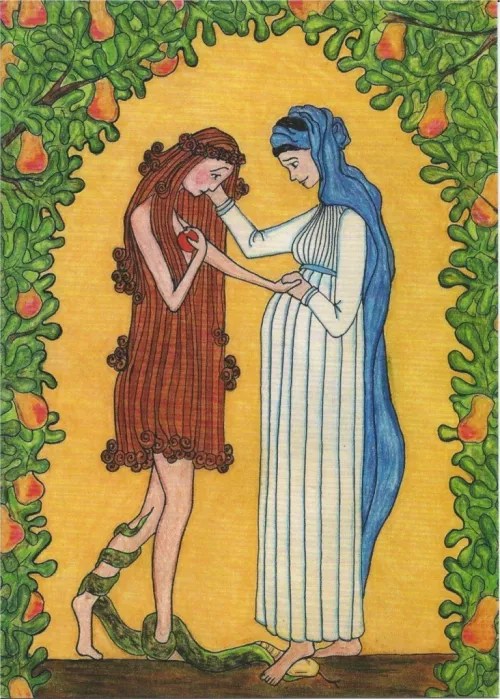
“I will establish hostility between you and the woman, between your line and her line. her offspring will crush your head you you will bruise his heel.”
– Genesis 3:14-15
It was never about the fruit. It was always about love. Jesus was the only way an authentic free-will exchange of love and communion between creator and creation is possible.


 Reflections of a Variant
Leave a comment